On Friday we took 15 children from Letaba special needs school to Daktari animal orphanage where we had previously
visited at the beginning of the trip. The children travelled in their bus and arrived at the sanctuary to meet some of the animals there. Many of them have never seen or felt such animals. We were greeted by some friendly pet dogs which the children appeared to be scared of, backing off and looking frightened. Some of them appeared to be more relaxed although those who had more of a physical disability in a wheelchair or who found walking a difficulty were the ones who appeared to be scared.
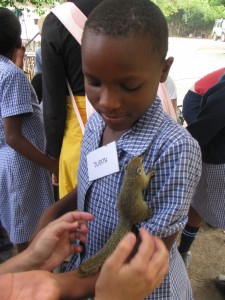
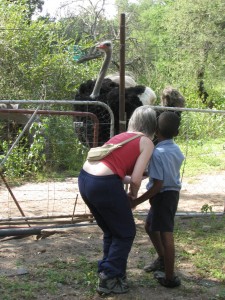
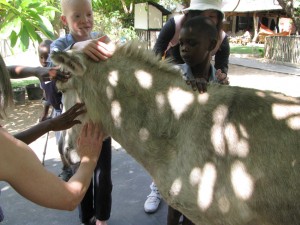
After lunch the children were taken around the animals at Daktari by their very accommodating volunteers. The children were able to have hands on contact with the safer well managed animals, such as baby squirrels and a baby mongoose, along with holding and touching a tortoise and meeting a blind donkey. For the children who had site problems they appeared to verbally express with their teachers the connection between animals having disabilities like theirs. They also were able to see eagles, who were now unable to fly due to damage to their wings. This was explained to the children in such a way that this was a physical disability for an eagle, as it would normally be able to fly and now cannot. Again the children appeared to understand this as a physical disability that they could relate to themselves.
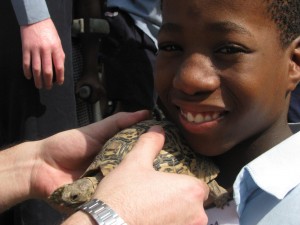
Touch was also a large part of the trip. Some of the children were very excited and confident when the squirrels and baby mongoose were around them. They were able to have them on their shoulders and were able to stroke them gently. They appeared to get great pleasure from this, many unsure faces that seemed to turn into amazement. The touch of the tortoise and its shell gave us a chance to allow the children to feel different materials, going from the fur of the donkey to the hard shell of the tortoise.
The children who seemed to back off from the animals had one to one attention from some of the volunteers, to help them have the confidence to touch an animal that they may have never seen before. The volunteers helped the children by taking their hand and gently stroking the animal until they were confident enough to do this on their own. This then created smiles and laughter.
Many of the children were fairly quiet when around the animals and others appeared to be very over stimulated, getting very excited and were unable to calm down easily. Their concentration and amazment of the animals appeared to give some of them confidence.
Many of the children who we have worked with appear to not verbalise well to communicate their needs although they have a good understanding. It was noted by teachers that some of the children will usually get attention by hitting or making loud noises instead of using words. During this trip some of the children began to use words to say the name of the animals which they copied from the volunteers. We then began to work hard with the children and teachers to help them verbailse their needs instead of their normal attention seeking behaviour of hitting and shouting. This was great to be part of and we wished that this was something we could work consistently with, with the children for the next few months. We encouraged them to use words to ask for things such as a drink, or to say an animals name rather than just point and make a loud noise. This was then rewarded to them by asking them to verbalise ‘well done’.
Our observational aims for this trip were focused on emotions, behaviour, feelings, senses, stimulation and abilities which were all recorded for our own research and for the teachers benefit.
Before the trip we were given basic information on the children that we would be working with that day, on their disabilities, ages and background family traumas such as their family members that had died. We were given, at times, different information on the children’s disabilities from various teachers as apposed to what was written in their notes. In the UK, gaining access to records such as these would be a highly confidential process, although in this country and environment seems to be accessible to anybody. This enabled us to have a better understanding of the children that we would be working with on this day.
We have aimed to start an individual record on each child focussing on their emotions, behaviour, disabilities communication and any disclosed traumas in their lives which is more in depth than the medical and hisory record already existing. This is started in a book called ‘All about me’ in which the idea has been taken from a children’s hospice in the UK where this is successfully used to help and commuicate with the people who are caring for the child, although the content in the UK will be very different to the children in this environment. We decided to keep the name ‘All about me’ as it was easier and simple for the teachers to understand due to the language barrier.
The ‘All about me’ is to help us as volunteers learn more about the child’s individual needs and behaviour that would be written down and observed. This is of couse more importantly for the teachers benefit as there are so many children staying at this school. The children have many disabilities that have not been diagnosed and this is something that we may never find out, they also have many undisclosed traumas that again we may never know about, but at the moment, by concentrating on their behaviour, self expression and abilities we aim to aid and benefit the children on activities such as this trip. As communication, support with emotions, behavioural disabilties, and working around feelings has been asked for by the teachers, we aim to provide them with as much support as possible.
We learnt from this day that the problems of the children are far greater than what was first thought and observed by us when we first walked into this school, and that this project will now be taking on a more indepth and focused approach to communication.
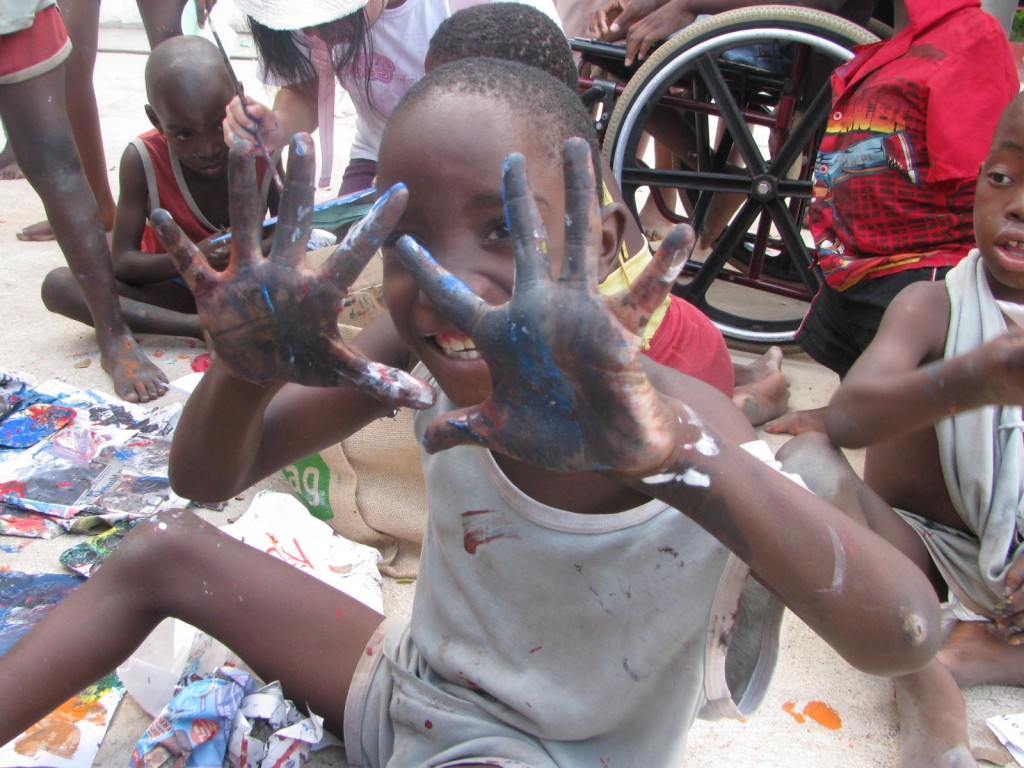
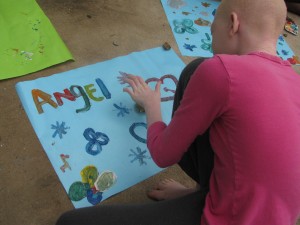 On Monday the volunteers went back to Letaba school, taking with them paints, crayons, party packs, with an assortment of plastic musical instruments and some bottles of bubbles.There were approximateley 15 children who appeared pleased to see us again and quickly joined in the activities. Their enthusiasm apparent as we had no more paper to draw and paint on! Swtching however to the younger children showing them how to blow bubbles and play with the musical toys was fun and sad atthe same time, knowing that we would not be coming back this trip to do these creative activties with them. This seems such a small step at present , but brings such joy that is all worth while.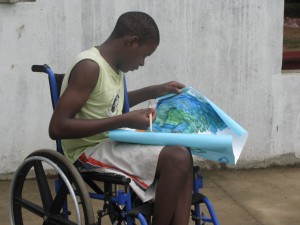

 News, Uncategorized | Lisa March 25, 2010 |
  Comments (2)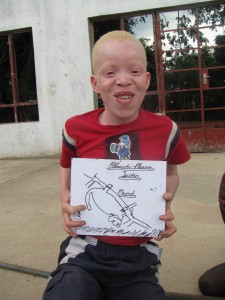

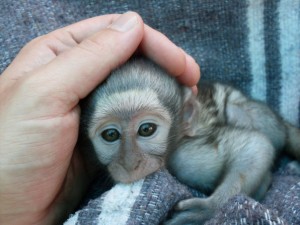 On Saturday we were lucky enough to visit the Vervet monkey foundation where the volunteers were taken on a tour of the sanctuary. They were told about the conservation issues and learned a lot about the behaviour of the vervet monkeys in the troops. They also saw a baby monkey who had been unfortunate to have a small disability of his legs, but had been able to adapt well to his environment and was a very happy monkey. This was helpful for the volunteers to learn about another species of primates that can also have disabilities which would relate back to the children we are working with and how they have managed to adapt to their surroundings without the aid of external help. Many of the children at the school have disabilities such as having no arms or no legs, and have been given no support for this, but like this monkey, are able to adapt their disability into their independent life.
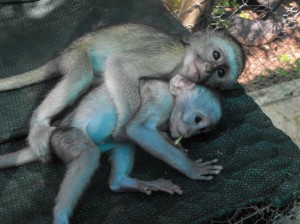 The vervet monkey foundation take in abused, orphaned, rescued and injured monkeys. Another of Yebo’s main aims is to support primate conservation so we will take this opportunity to inform you of the great work they are doing and the help they are needing from people around the world.
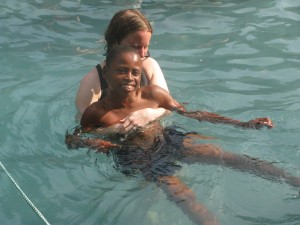
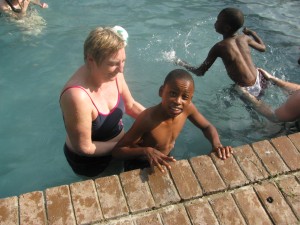
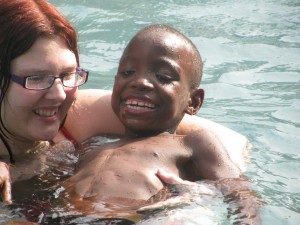 Today while at Daktari, we had great pleasure in taking the children swimming. For many this was their first time. They did have a swimming pool at their school a few years ago but this has now been demolished.