On Wednesday afternoon we went to Letaba school for our first day of activities. We started to work with around eight 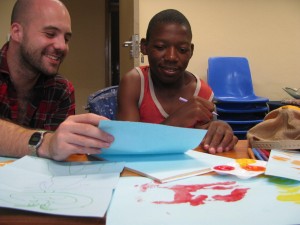 children, using paints, pens and pencils, and paper to create artworks based around the children’s identities. For example, they wrote their names and ages, drew pictures of their friends and families and the things they like. We also helped them to paint their hands and feet and make prints to contribute to their artwork. All the children appeared to enjoy the activities, although it was difficult communicating at times because some couldn’t or wouldn’t speak. The creativity of the art allowed them to communicate with us in non-verbal ways, which helped us to get an indication of the children’s thoughts and feelings.
As the afternoon went on, more children came by and noticed what we were doing and came to join in too. We blew up balloons which they painted faces on, and made paper planes which they had competitions with, throwing them across the room. As more children came and it became more chaotic, Angelica went outside with some of the children to do drawing and painting, allowing the quieter children to enjoy the activities inside. The children appeared to enjoy the afternoon, and though it was hard work keeping up with their energy and excitement, it was great to see them responding positively to the activities.
Today we went back to Letaba special needs school to have a meeting with the teachers and to discuss their needs and how we can support them through our aims and objectives. One of their main concerns was communication of feelings and personalities which they find very difficult to gauge with the children that are unable to communicate verbally. We have decided to work with 2 small groups to start off with, giving us a chance to focus on what is right for these particular children and to enable us to get to know their individual needs and disabilities.
When we arrived at the school, the teachers and staff were very welcoming and generously offered us some tea, coffee and home made cakes which we all very grateful for .
We presented several ideas to the teachers which they were very enthusiastic about, but we all agreed that it was best to keep our activities simple. As we have only 2 weeks with the children on this trip, we feel it is important to begin with getting to know the children with very basic communication and feelings activities to ensure we do not raise disturbing memories, feelings and triggers of bad experiences. We have organised for the children to visit both a wildlife sanctuary and a chimpanzee sanctuary as part of the activities.
The teachers feel they have no formal training on working with children affected by trauma and disabilities and are in their words ‘desperate’ for support from professionals such as play therapists and counsellors. We all feel that sharing skills, fresh ideas and experiences is a very important part of this support. Tomorrow we will go back to the school to start working with 2 groups of children and to continue our support to the teachers and their needs.
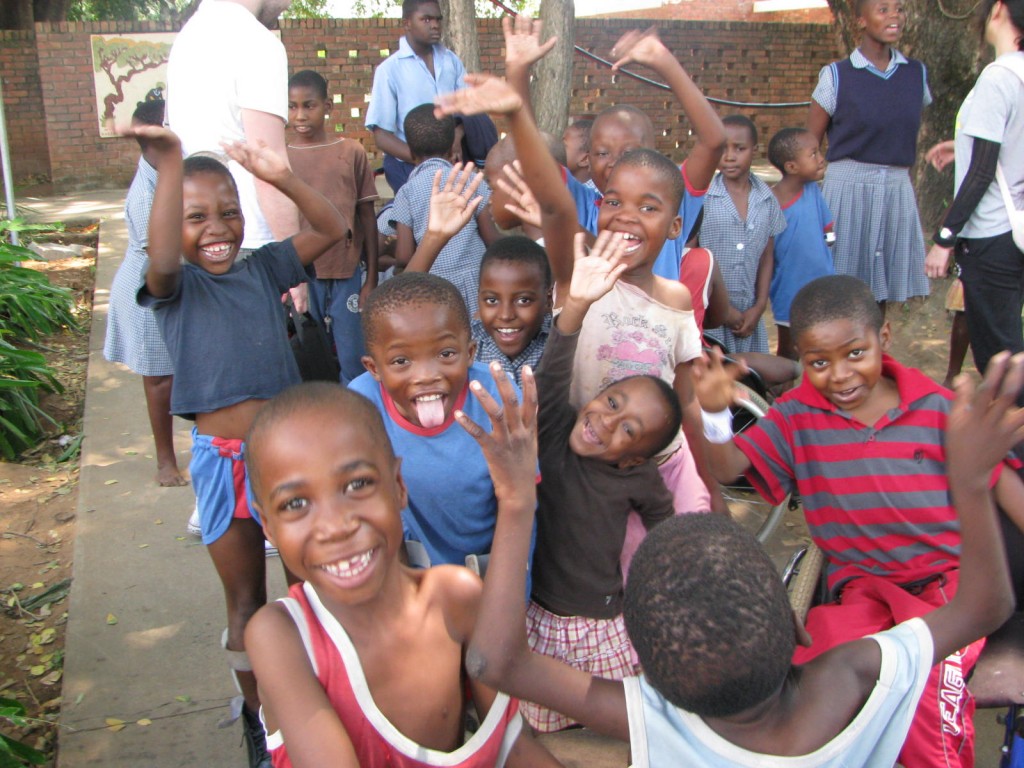
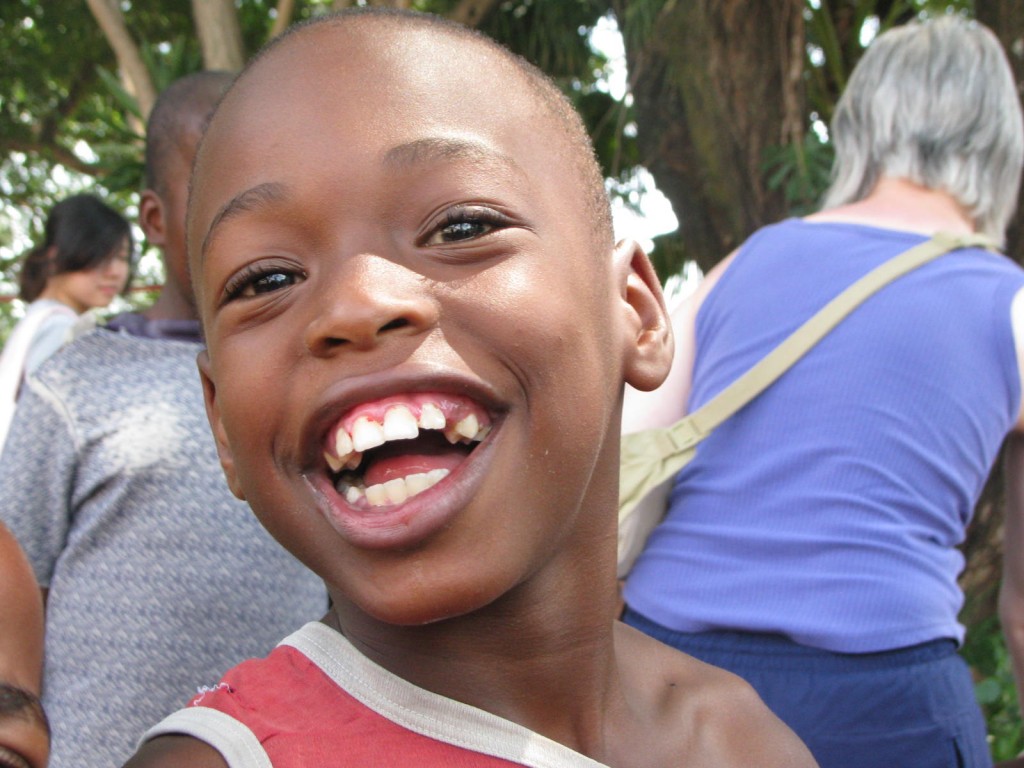
At the end of our meetings, we were met with a lot of children who we were happy to play with, sing songs and draw pictures in the sand with sticks! The children were very interested in a camera and we showed them how to take photographs which they loved. The children who are unable to use their hands were assited to take photographs of their friends and appeared to be very happy while we spent time with them. We wanted to share with you, some photographs below, of the joy that appears to come from their smiles and personalities.
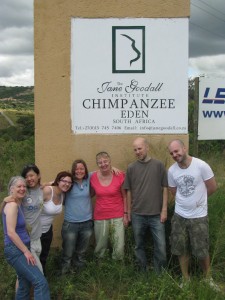 We visited Chimpanzee Eden which is a Jane goodall institute and the only chimpanzee sanctuary in South Africa. Chimpanzees are not indigenous to South Africa so this sanctuary is a safe haven for the chimpanzees who are unable to be released back into the wild due to various individual stories of rescue.
The sanctuary has a permit to house a specific number of chimps but wishes to expand this in the future by gaining more land and building more enclosures.
The volunteers stayed overnight at the chimpanzee sanctuary and enjoyed learning about the chimps on the organised tours which run throughout the day by experienced handlers and managers of the sanctuary.
We were lucky enough to speak to several of the experienced staff and managers who taught us a lot about the behaviours that they have observed in the chipanzees who have all had different stories of rescue. Many of the chimpanzees stories that they spoke to us about were very relevant to our aims and objectives for the use of communication actvities for children who we are supporting with the use of relating primates feelings and behaviour to that of children.
They spoke alot about their experiences of various cases of chimpanzees who presented with various forms of post traumatic stress disorder due to their previous life experiences and traumas. They have found that many of the chimpanzees have still got old habits and triggers that come from thier past. They descibed chimpanzees having depression and how long they would take to recover from this. This was a different amount of time for various chimpanzees but we were told that they had observed chimpanzees who wanted to commit suicide by trying to starve themselves or making themself sick.
They told us of their own observations that animals recover more quickly from depression to that of humans, due to the fact if they want to live, they will need to get on with their life in order to become part of their troop and to eat well. This comparison to humans tells that humans , when depressed from a trauma are supported by friends and family etc, who may bring them food and comforts to help them through this time. Chimpanzees however, will not do this for the depressed member of the group. 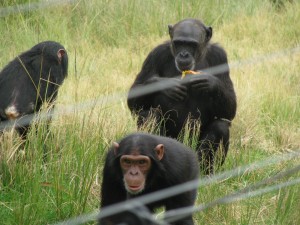
Chimpanzee Eden appears to be a very well managed sanctuary and thier chimpanzees are cared for very well by their experienced handlers.
They were very welcoming and it was a pleasure for us to be able to speak to them about their experiences and observations when working with the chimpanzees.
We are hoping to arrange a visit for the children we are supporting next week to see the chimpanzees at Chimp Eden , for what will maybe be the first, and only time in their lives.
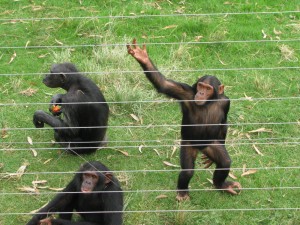 The tour of Chimp Eden was a fascinating and emotional experience. We were taken around the outside of the three enclosures and told the stories and backgrounds of the chimps while we observed their behaviour. There were some real characters. One female chimp, for example, stands up and claps for food when the keepers are near – a behaviour she learned from begging while living in a zoo.
Another very distinctive personality is one whom has never been in the wild, unlike the rest of the chimps who are victims of the bushmeat trade and lived in the wild before their mothers were killed. He was a victim of experimental research before being given to a gypsy who forced him to do tricks, wear clothes and eat with a knife and fork. He was also beaten with a baseball bat, resulting in brain damage,. Despite showing some behaviours which the keepers say indicate he is ‘not all there’, the others chimps are very accepting of him and seem to understand his disability. The relationships between the chimps are very strong and complex, which will be good to show the children who can identify to the chimps comforting and helping each other.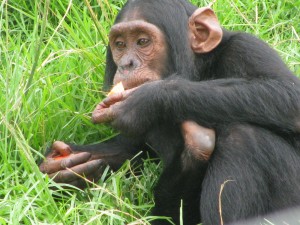
Another chimpanzee was kept as a pet and was dressed like a child and given a hair cut, as if he was a human. They shaved all his fur off apart from his hair on his head. As a result of this he thinks that he is a human. Even though he is now living with other chimps he will pluck off his hair on this body, which to him feels wrong to have this on him.
One chimpanzee who was kept in a circus now does handstands as this is what he was taught to do.
There is a huge success story at the sanctuary of a chimp who was kept as an attraction outside a nightclub, where he was given alcohol, cigarettes and drugs and humiliated by humans. After a difficulty recovery and rehabilitation from addiction, he has gone on to be the alpha male, the most respected position within a group. This is a story which may be used in a subtle way to illustrate to the children that it is possible to experience trauma and still go on to lead a happy, healthy and successful life.
All of these examples of stories may or may not apply to the children’s own behaviours and experiences but represents triggers and habits that have stayed later into life.
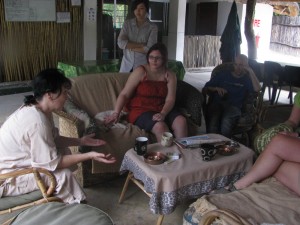 Today we visited Daktari animal orphanage to gain an understanding of the work they are doing and a place where we may be able to tale the children to, that we are supporting. Daktari is a small animal orphanage run by a French lady, Michelle, and her husband. They educate children about their environment, health and animal conservation. The children that they work with are all from local schools and villages, many of them whom have never experienced leaving their village to visit such a place as a wildlife sanctuary. They teach the children how to respect and care for animals as well as approaching ‘taboo’ subjects in South Africa such as sex education.
It has been in operation for only fours years but they have a huge amount of knowledge that we can learn from. Having an understanding of the culture that they work within is something that we are able to learn from, and their understanding and knowledge of the methods they use to educate the children we feel will really help us in our work. Set in a beautiful and peaceful environment it is the perfect setting to take children who have experienced trauma.
 We are really looking forward to taking a small group of the children there. Last year the children from Letaba school visited here and appeared to have some great experiences where they were able to have hands on contact with smaller animals such as a tortoise. This appeared to give them a very new experience and one that we wish to continue and develop further during this coming trip.
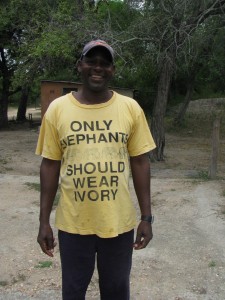
We also were able to meet the local staff who help with the running of the sanctuary (pictured right). The staff support the volunteers and Staff members at Daktari are local people who have great knowledge on wildlife that they have been brought up with. Many local people want to help to conserve local wildlife and see the importance of the message that Daktari are spreading out into the local community. They are also taught by Daktari that having these animals also brings tourism and money into the country, and also creates lots of jobs and work for the local people which is seen as a positive part of the community and how with the right education they will all be able to acheive this messgae together.
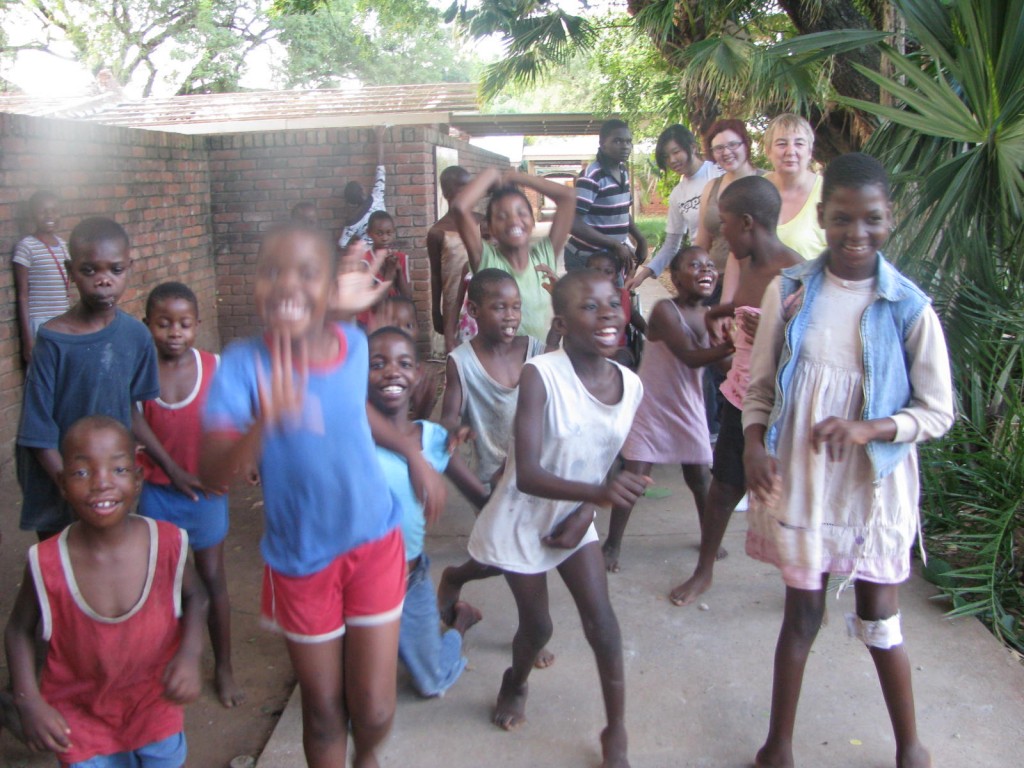
Our first eventful day!
Written by Emmy Fisher, Angelica Chan and Val Reece
Today was our first day of the trip and we spent the morning enjoying our lovely environment at the hostel, watching many beautiful birds, whilst Angelica caught up on her beauty sleep.
This afternoon we went to Letaba school to meet the children. We were met by smiling faces, children running up to us to
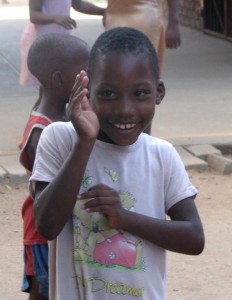
A happy smile at Letaba school
hold our hands and give us hugs and high-fives. It was great to meet them and experience the friendly, happy atmosphere of the school, but also gain a little understanding of the difficulties that these children face. It’s amazing how happy the children are just to see us, and it’ll be fantastic to spend the next two weeks working with them. The children in Letaba School were very energetic and happy, which was totally out of my expectation. Seeing these children face to face is a completely different experience from watching them on a TV programme.
l think we are going to make a great team and we all agree that this trip is all focused on the children. We can’t wait to get started and are looking forward to our trip tomorrow to Chimpanzee Eden.
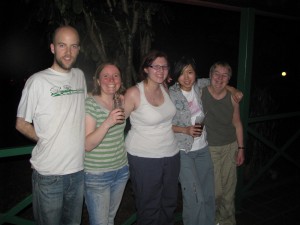
The beginning of our team, with more joining us tomorrow!
 News, Uncategorized | admin March 21, 2010 |
  Comments (0)