Category: Uncategorized

Interacting with wildlife for the first time in their lives

We take a look at some of our projects in South Africa back in September 2009, where the children from a special needs school who our volunteers are supporting, visit a wildlife sanctuary to meet African animals for the first time in their lives:

Interacting with wildlife for the first time in their lives

September 2009

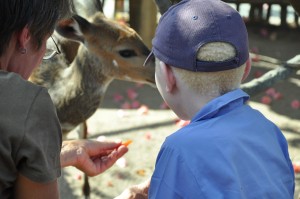
Yesterday we took 11 of the children of Letaba special needs school to Daktari animal orphange.  Supported by the child with baby bush deerteachers this outing was to give just a few of the children from the school an opportunity to see animals they had never seen or did not know existed before.
Many of the children have never been out of their school like this as it is a boarding school, and many of them are orphans or have families that struggle to cope with their high physical and behavioural needs.
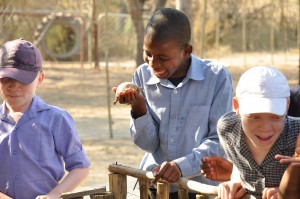
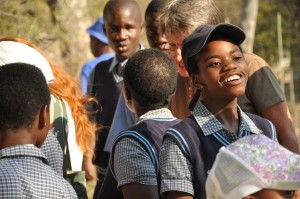
The children expressed so much excitement when getting onto the bus and when we arrived their faces said it all.   When being told they could stroke a squirrel, a bush deer and even a dog, their faces lit up with amazement.  Some of them have never even seen these animals before.   Several of the children just wanted to look as they found it a bit daunting and looked a bit unsure when a dog approached them, having never met one before, but they soon seemed to relax.
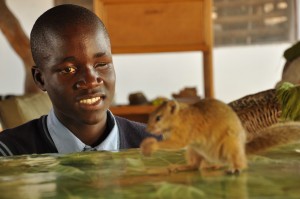
child with squirrel They were lucky enough to also see a giraffe, a baby orynx, ostridges, mongoose and many more rescued wild animals, which if possible will eventually be released back into the wild. Some of the children got to hold a tortoise, which they were fascinated by.  They were taught all about the animals, how they live, where they live, what they eat, how long they live and what care they need while they are in the animal orphanage.  The children got told about several of the animals that have disabilities such as the blind donkey and eagles who have lost their legs which the children appeared to relate to due to their disabilities.  They asked questions about how the animals became disabled like this.
The children went home to their school with some birds feathers given to them by Daktari.  The staff of Daholding a tortoisektari were very welcoming and kind. The teachers were very appreciative of the day and expressed that this is a once in a life time opportunity for these children.  They also said they were going to be stopping off at a shop on the way back as none of the children know what a shop is.
The aim of the future of Yebo will be to give as many children as possible opportunities like this, to learn about wildlife, understand they are not alone with their feelings and disabilities and to give them a therapeutic and educational experience.
wildlife trip

Children’s hospice primate day!

14th November 2009

Children’s hospice primate day

Siblings supported by Little Bridge House children’s hospice took part in a Yebo primate day this month.  The day was supported by Adele Simms and Nicky Jones, siblings support workers at the hospice in Barnstable which is pacommunication boardrt of the charity ‘Children’s hospice South West.’

The children focused on work with communication and feelings where they took part in various creative activities.  The day started with a look at primates from all over the world so the children could understand how primates behave and communicate, and the problems they face in the wild.  This ranged from seeing how bonobos play and get happy around eachother, how some monkeys can have disabilities like children, and learning about how primates in the wild such as chimpanzees can have family members that die.

primate puppets

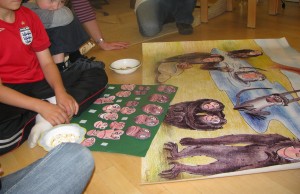
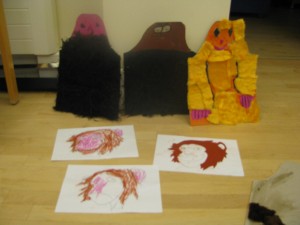
The children then took part in various activities. Supported by Yebo volunteers Katja Festuel and Helen Benwell they used a  communication board which contained drawings of chimpanzees, Bonobos and Vervet monkeys in different situations with blank faces.  On another board were velcro primate faces with different feelings and expressions drawn on  such as confused, happy, sad, angry etc. The children thought about different situations the primates may be in such as ‘having no friends’ where they then matched up the faces to the drawings on the board.

The next activities involved creating primate puppets where the children chose a primate to make.  This was great fun and lots of glue, paint and furry material came out to create the primate faces which were made up of gorillas, orangutans and chimpanzees. The communication boards and colouring in pictures were created by Yebo artist Hellen Bersacola.

The end of the day was rounded off with computer games involving animal wildlife computer puzzles and a cheetah game which was supported by Alasdair Davies from the Great Primate Handshake.  The children went away with Primate monkey calenders given to them by Yebo.

For more information on primate days please email lisa.davies@yeboyes.org

Art materials generously  donated by PDA Crafts

childrens hospice south west

Training day for volunteers

30th January 2010

Volunteer training day

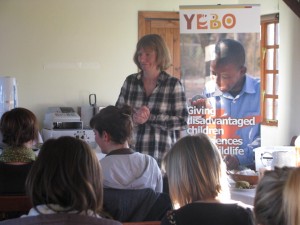
On 30th January 30 Yebo volunteers gathered together for a training day.  The aim of the day was to support all of the volunteers in the work that they will be doing abroad and in the UK.  It was also a chance for volunteers to meet us in person and to get to know eachother.

The day was held at Loseley park in Guildford, Surrey and covered the following topics:

Play therapy/therapeutic play : Veronica Etherington, Play therapist, CHASE hospice care for children

Primate behaviour and conservation: Alasdair Davies, London Zoo, Great Primate Handshake

Working with children with disabilities: Veronica Baily, Children’s nurse, CHASE

Working with children who have been victims of crime. : Hayley Green, Child protection officer, Surrey police

Veronica Etherington, PLay therapist

Veronica Etherington talking about play therapy

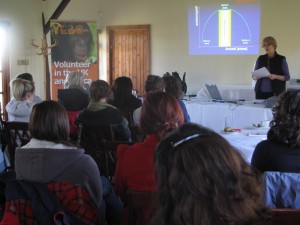
The speakers spoke about the work that they do, the scenarios that the volunteers may come across in their roles and some examples of activities that they could partcipate in with the children they will be working with.

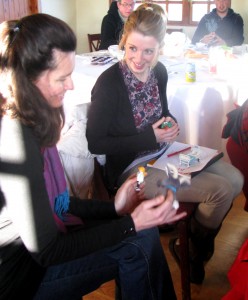
The play therapy was aimed at developing different activities for children, and the volunteers were asked to draw and play with toys that they were given on the day.  Everyone looked anxious when they were asked to get into pairs and play with some toys.  But when asked to put them away there was some laughter when Veronica said that they looked like they were having fun now.  The aim of this was to allow the volunteers to be relaxed when playing around children, and were told that there was no need to feel silly, and that this would all be part of their time with the children.

Volunteers learn about 'playing' in play therapy

Volunteers use ‘play’ to communicate

Working with children with diabilities highlighted the work that a childrens hospice does, with an aim of allowing UK volunteers to understand life inside a children’s hospice, which is often thought of as ‘difficult’ or ‘very sad’.  It aimed at showing the positive and rewarding examples of the work that children’s hospices do.  South African and UK volunteers will be working around children with disabilties so this subject was also spoken about.

Working with victims of crime looked at scenarios that the volunteers may come across in the UK and Africa.  Hayley Green from Surrey Police spoke about different aspects of child abuse in the UK, and how this may be related to the work they may do in Africa.  Many of the children abroad have been through severe traumas such as abuse and this was something that was spoken about openely by Hayley to give volunteers examples of abuse in the UK, and how children that they may work with in Africa, have had similar experiences.

Primate behaviour and conservation was looked at and Alasdair Davies from London zoo spoke about primates that are found in the world, and the similarities between us and them.  Conservation was also talked about to allow volunteers to learn about the support that they will also be learning about when they visit and work with various primate sanctuaries on the trips abroad.  As primates are used to front Yebo’s projects it was a good chance for volunteers to understand the link between the behaviour and life expeirences of some of the children they may be working with, to the primates they will also be learning and working with.

We hope that the volunteers enjoyed themselves and many got out of their beds at the crack of dawn travelling from various places around the country such as Birmingham and York.  We were very grateful to all of the volunteers that came and appreciated their feedback on the day.

UK volunteers will be contacted soon regarding UK projects we are looking at expanding.

Veronica Baily, children's nurse

Veronica Bailey, children’s nurse

Training days will be held 3-4 times a year. To get involved in the next one email info@yeboyes.org.

Primate behaviour

Supporting children with disabilities

Wildlife and conservation education with children with disabilities

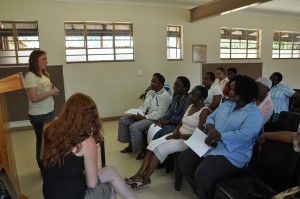
Today we had a meeting at Letaba special needs school, where we did a presentation with the 23 teachers working at the school to tell them our ideas, and  to see if they would be interested in working with us to achieve many of the Yebo staff speaking to Letaba school teachersactivities that they need support with.
They have currently 201 children with special needs at the school and also a special classroom for children who are blind.  They have 23 teachers and no classroom assistants in the week. The teachers explained that they would like some training in working with children with disabilities, as this is something they have never had any support with.
We were invited back to the school to enable us to work together with them in the future.  Supporting them in their individual requests and needs.

Several of the issues they asked for help on were;

•    That they needed a great amount of support in how to encourage children to express their feelings about things that were making them happy or sad.  They gave us examples of children who had been through severe traumas, who never spoke about these experiences.  Some may go unnoticed, and others will talk to the teachers briefly about these times.  The teachers expressed a need for support to allow them to communicate more with the children themselves.

•    The teachers asked for help on sensory stimulation guidelines when working with children with disabilities.  They say as they have had no formal training with working with children with special needs that this would be of great benefit to them. Again this is something that our volunteers will support them with through the use of sensory activities using touch, smell, sound and visual activities, which can incorporate the use of conservation activities to help educate the children about nature and wildlife conservation, which is one of Yebo’s main aims.

•    Nature and conservation education is something the teachers are extremely keen for us to help them achieve.  At present they have none, and the children at the school have little or no awareness of the wildlife that live around them, how to act around them when they do see them and how they need to care for them to benefit their environment.  Many of the children do not go out of the school and have never seen animals such as giraffes, monkeys and reptiles that live around them.  When they are at home in the holidays then they may never go out of their village to have the opportunity to see the animals.  Our volunteers will begin to support the teachers with educational programmes and activities such as visiting wildlife conservation organisations and sanctuaries in the area, and by also encouraging the sanctuaries to start working with the school.

•    Classroom assistants are something that the teachers are also really keen to have working with them at the school.  At present they have none, and with class sizes reaching above 20 to one teacher, many of the children with high learning needs are missing out on education and attention that they deserve and need.

Primate feelings and communication activities

14th September 2009

Primate feelings and communication activities

By Lucy Garnett Co project coordinator.

Today we again visited Letaba special needs school, to give a talk to the children about feelings and emotions and how people can express their feelings.
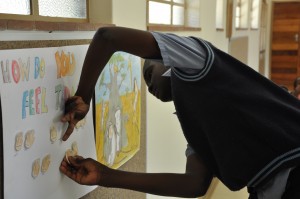
We made a communication board for children whom find it hard to communicate feelings.  This was created by our activities team, as the teachers has expressed the need for more communication with feelings.  It was a simple child using communication boardjungle scene with three vervet monkeys that have no faces, and on a separate sheet there was 14 vervet monkey faces with 7 different expressions on, the aim of the board is to match their feelings with a face of one of the monkeys, where they stick the face onto the board.  This seemed very effective and the children took to the board very well, they recognised the monkeys In the picture as the school has vervet monkeys around the grounds.
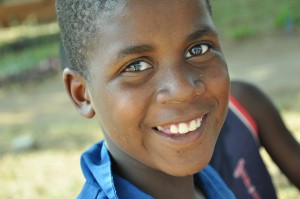
The children expressed times when they may feel sad, for example one girl said she would feel sad if someone in her family had died  Another girl said she would feel excited when she passed her exam, another said she would feel worried if one of her family members was sick.  The children appeared to relate well to this and were interacting well with the communication boards.
child from Letaba school We then showed the children a short primate video, and explained how the monkeys behave, how they feel and that it is the same for humans sometimes.  A lot of the children hadn’t heard of or seen some of the animals we were talking about, they appeared very interested when watching the video. They related to the emotions that we feel and how we all express feelings, they asked us questions about primates and how they feel.  They also asked us lots of questions about the different primates they had seen in the video.
The talk appeared to go really well and all the children learnt that expressing feelings is a good thing, and that humans aren’t the only primate who does that.  They were also encouraged to use the communication board with their teachers. They seemed happy and pleased to do this.  The teachers said that this would help a lot with the children whom couldn’t communicate by words to express their feelings, worries, and emotions.
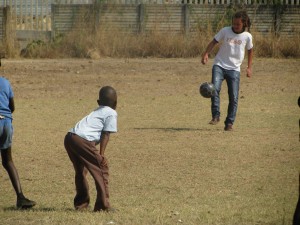
The day was rounded off by a game of football with the Yebo volunteers and the children, which we all thoroughly enjoyed.

volunteer playing football with children