Looking at feelings of animals and the challenges we face
 Today we worked again at Letaba school. Today in our 2 groups we were looking at feelings and animals and trying to adapt our aims to children with different spectrums of disabilities. This has proved a challenging task and one that we are continuing to develop as we go along.
This has proved a challenging project due to the disabilities and also the language barrier and understandings of the children’s needs. Many of the children have disabilities that have not been diagnosed and whom have very challenging behaviour. Nevertheless our volunteers are doing a fantastic job helping to bring the activities together with the children.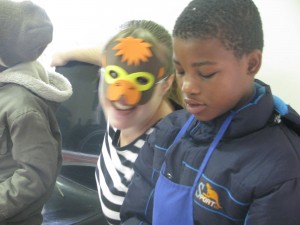
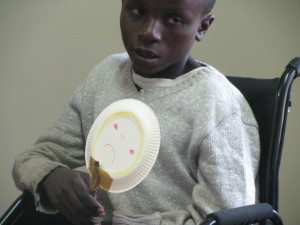
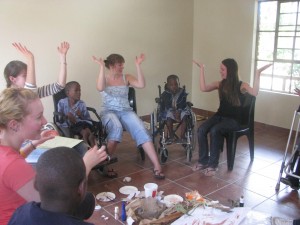
Both groups worked very well with the children, touching on feelings which was a difficult subject and challenge for us to focus on with the 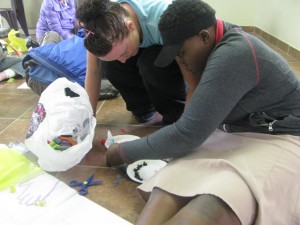 different needs of each child. The sensory group made monkey paper plate puppets, and they all drew happy faces on one side and a sad face on the otherside. Lucy and Ruth put on some masks and did some monkey acting and impressions in the circle with different noises and scenarios. Mia then helped the children to turn their plates around to tell us if they thought the monkeys looked ‘happy’ or ‘sad’. The aim of this was not to find out how the children were feeling, but to look at recognizing feelings. This was important as we did not want to stir up or uncover any feelings that the children have inside them, due to the
  nature of their traumas, as we are aware that this could cause more harm than good to them if not supported
  consistently by the right professionals who work in therapy.
They also included a lot of singing and music in their sessions which the children appear to respond very positively towards.
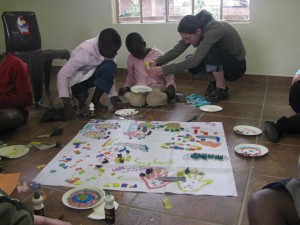
The other group looked at making friends, making hands on a board of each of the children, and looking at feeling happy when animals are with their friends, allowing the more able bodied children to use their own ideas in. Some of the extra children in this group that join us regularly even when they are not scheduled to come into the group also partake in the activities, but have very different needs to the other children, which is another challenge for the team.Their work looked beautiful as they also used colours to express different feelings.
When working with the children in groups of around 10-15 children, with 6 volunteers in each group, we begin to get a feel of the frustration that the teachers have when they are teaching the children. As we recognise throughout our time, the very different needs of all of the children, we try to combine different activities for different levels of ages and abilities focusing on difficult subjects such as feelings of animals. Those volunteers whom have worked in the UK in their own jobs with children with disabilities, are used to working one to one with a child, also knowing beforehand their abilities and emotional needs. A big part of our work is observations of the children which we have been asked to do for the teachers who are trying hard to understand some of the children that they do not get to spend a lot of time with. The children we work with have been selected as those that have higher emotional and/or physical needs. This also helps us realise that our previous work experience can hopefully be beneficial for the teachers as well as the children.
Children have their own minds and when making and planning activities, you have to have many different ones, which the volunteers have to pre-plan , but improvise at the same time.
We were all pleased about how the day went, and were happy about the activities that we did with the children. We will now look forward to developing them further.
 News, Uncategorized | admin August 12, 2010 |
  Comments (1)
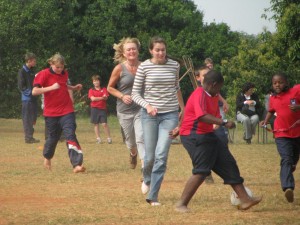 Today the South African Yebo team were lucky enough to be able to visit a school based in Tzaneen teaching children from preschool age and upwards.
 lucky enough to have a football match with several of the classes which was great fun.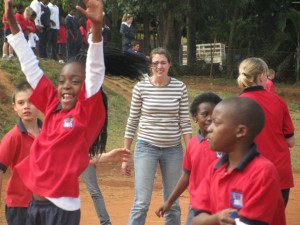
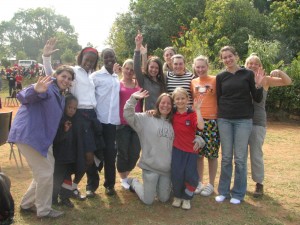 with the ball, while Jane and Gillian helped with defense. Lucy, Helen, Rebecca and Ruth played well as they had hold of the ball. Judy took photos while Charlotte rested her ankle. The children from the school were playing very well, and we even managed to score a goal! We had a great day and the school were very interested in the work we were doing with Letaba school. They may be getting involved with helping Letaba once a month by sending some of their students to do some art and crafts with the children which we hope will be a positive benefit to Letaba.
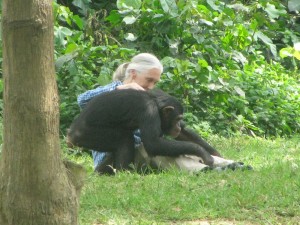 In July this year Jane Goodall visited the Ugandan Wildlife Education Centre where Yebo were staying at the time. This was part of her travels to mark the 50th anniversary of her work with chimpanzees.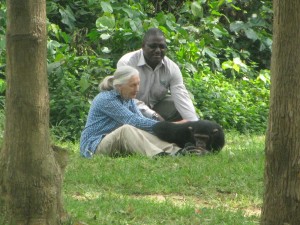
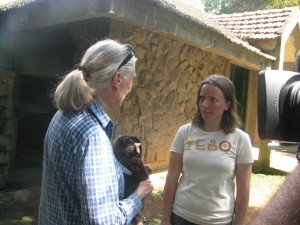
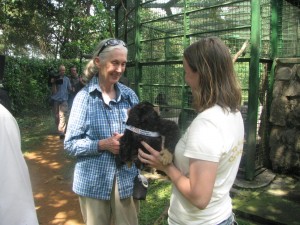 from Gombe national park, combining the needs for the local people, working together with them in sustainable development programs that bring together communities to work in partnership with them.
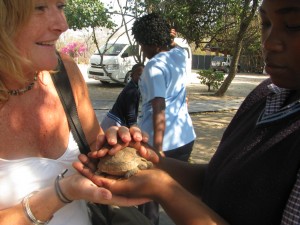
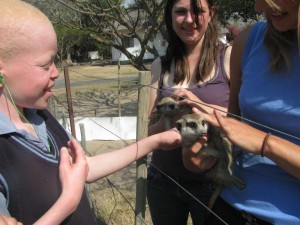 Today we set off at 10.00 to help he children at Letaba school get on the bus to go to Daktari animal sanctuary near Gravelotte. The sanctuary is owned by Michelle ad Ian who started the project to help animals, and also children in the local village. A lot of their aims are very similar to ours, and when we are working with the children on each trip we will take them to Daktari to visit the animals where they are allowed to have hands on contact with some of the smaller ones.
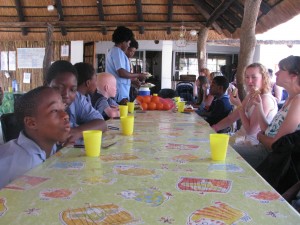 are very independent. One young boy who we thought would need our help, is unfortunate to have no hands, and also cannot walk. As we went to help him when he was sat in his wheel chair to eat, the teacher who came with us,
  explained that he did not need any help and found it easier to sit on the floor when he ate, which he managed very well on his own. Again, we are learning how independent many of these children are.
 also appeared to enjoy and were very inquisitive of this.
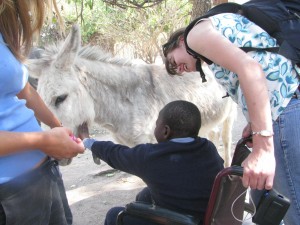
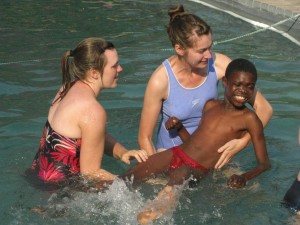 eyes. One of the children who had been before was laughing as he hid behind a tree as we approached the donkey. He laughed, telling us about the last time that he had been when we held him on the donkeys back who decided he didn’t like him very much! we soon learnt and of course had hold of him at the time. We giggled with him about it and he then came and said hello to the donkey.
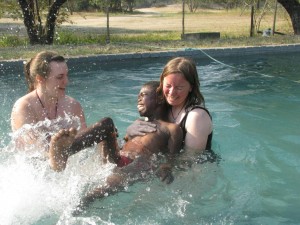
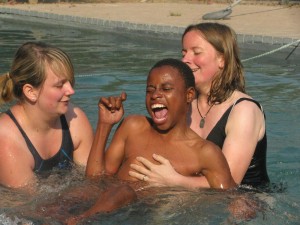 We then decided to give the children the option if they would like to go swimming. Many of them wanted to, so Ruth, Lucy, Lisa and
  Nichola went into the pool with some of the children. As some of the children have a wide spectrum of disabilities, the children with high needs needed more support than others. One of the children who cannot verbalize well and has a lot of energy loved swimming and as we supported him around the pool, kicked and splashed as much as he could.
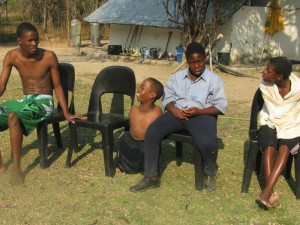 understanding of what we were saying when previously working with them. They now appeared to be very understanding of what we were saying and very quick to respond too.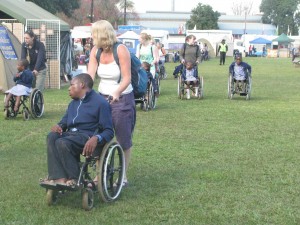
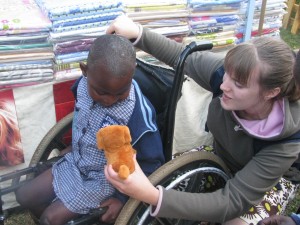 y at Tzaneen show with the children from Letaba special needs school. The night before we were told by the teachers that they would be taking all 189 children to the show which they would also like us to come too so we could help out as there were only 20 or so teachers with the children.
 together and would try to keep all of the children we were looking after together, but it soon appeared that we were out of a job as the children seemed to want to push their friends and carry their own friends who could not walk on their own. We were worried at first that some of the children were missing out, and those that struggled to walk would need our attention. We compared this attitude to the UK, as because of many of our backgrounds with children, this is very unusual and different to how we would work and the guidelines and rules that we would work to.
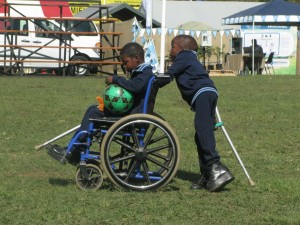 push the chair instead of us. We found this very interesting, and funny at the same time. We did look around us at one point and see some very happy and
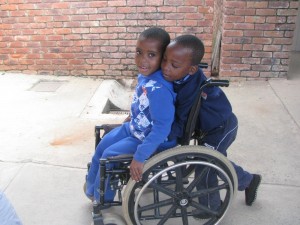
 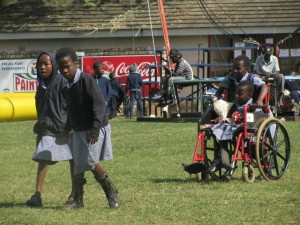 laughing children in the following mode of transport going past some of the show stalls. A child in a wheel chair had another friend on his lap, who then also had another smaller friend on his lap who was being held on by the young boy who was first sitting in a chair. On the bottom of the chair a much smaller boy sat on the foot rests. On the back of the chair a young boy was standing on the ledge at the back whilst a much older boy was pusing them along at top speed! We laughed and soon realised that these children were just incredibly independent, and again, it was us that were more worried about the children not coping with their disabilities than them or their teachers. This did upset us at times as we could see some of the children that may have been left out of things. This was difficult for us to accept and we struggled to hold
 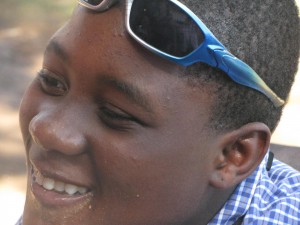 ourselves back from trying to help these less able children who looked as though they had a very big struggle with trying to walk such a long way.
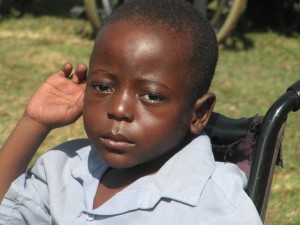 who had been going around the showground alone suddenly appeared and met at the end of the field and arranged themselves into groups of their classes. The teachers of the groups then gave them all food. Some of the teachers gave our volunteers a small amount of money to go and buy a child food if they had run out. After this we decided that during lunch we were causing more disruption than good so stepped back even though we wanted to help. We ate our lunch and returned to the show, not really understanding our role here.
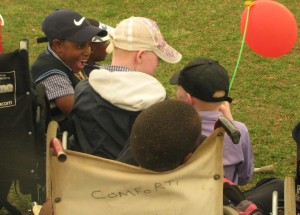 children love this independance and do not like to be looked after. She said this was a great opportunity for them to have some
 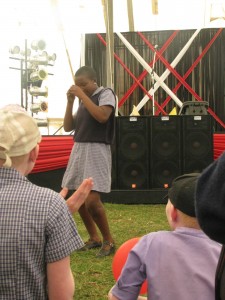 freedom in this safe area with their friends, which we then understood.
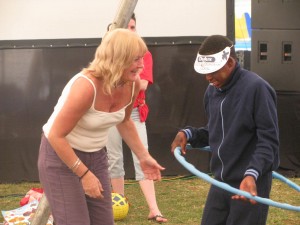 moves that they came out with! They even had a hula hoop competition which was also great. All the children dancing and all of those in the audience were laughing so much and all dancing in their seats to the music. This was so great as we saw how much this day had benefited their moods and minds as well as giving them independence and good exercise!
 Today was breakfast at 7am, so not quite as early as yesterday! Today was our first day of activities, which we started at 11am at Letaba special needs school.
 groups we had the older children.
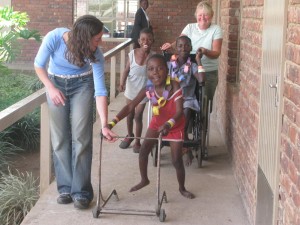 to relate this to monkeys who swing from a tree. However the children decided that they wanted to wear these instead of hanging them around the room. They then became very creative with all of their activities, making other items to go with their monkey necklaces. One little gil even decided to make a belt, so I’m sure she will be in the fashion industry one day! These activities were great fun, and again, taught us alot about the children that we had been working with and their abilities and needs.
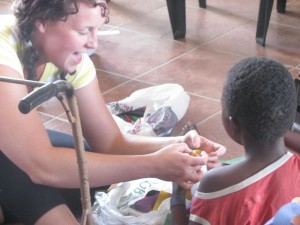
 no therapists. These behaviours will then be given to the teacher, Susan who is running the project with us.
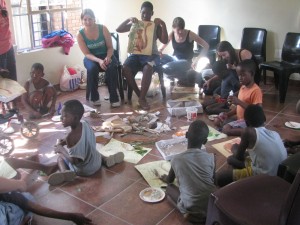 activities and used music and singing to start the day. This gave them them an opportunity to see which children were more aware and interactive before they started other activities. It was great for us as volunteers to have a smaller group with these children as we could spend more time with them, helping and focusing them with their needs. They had made up a hello song about monkeys.
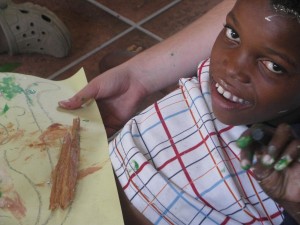
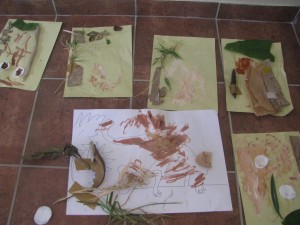
 press on items onto the paper with their hands and paint that also they could feel on their hands.
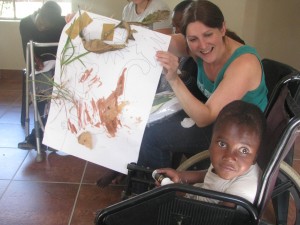 this group, due to the less able children not getting enough attention in class. Again this is due to lack of staff that have been provided by the government to the school. This is something they are desperately trying to fight against.
 had met the last time. This was nice as it made us realise that the children remembered well when Yebo were at the school a few months ago, and also last year.
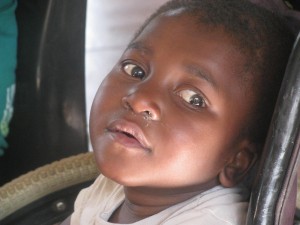 The sensory group again did a lot of painting and some singing, the children drew lots of monkeys in their drawings and other animals. We are looking forward to taking them to the animal sanctuary this coming Friday.