Activities
So what activities do we do?
One of our main aims is to allow children to express their feelings, life traumas and to discover behaviour through the use of therapeutic and educational primate-based communication activities.
How do we focus on feelings?
Communicating feelings
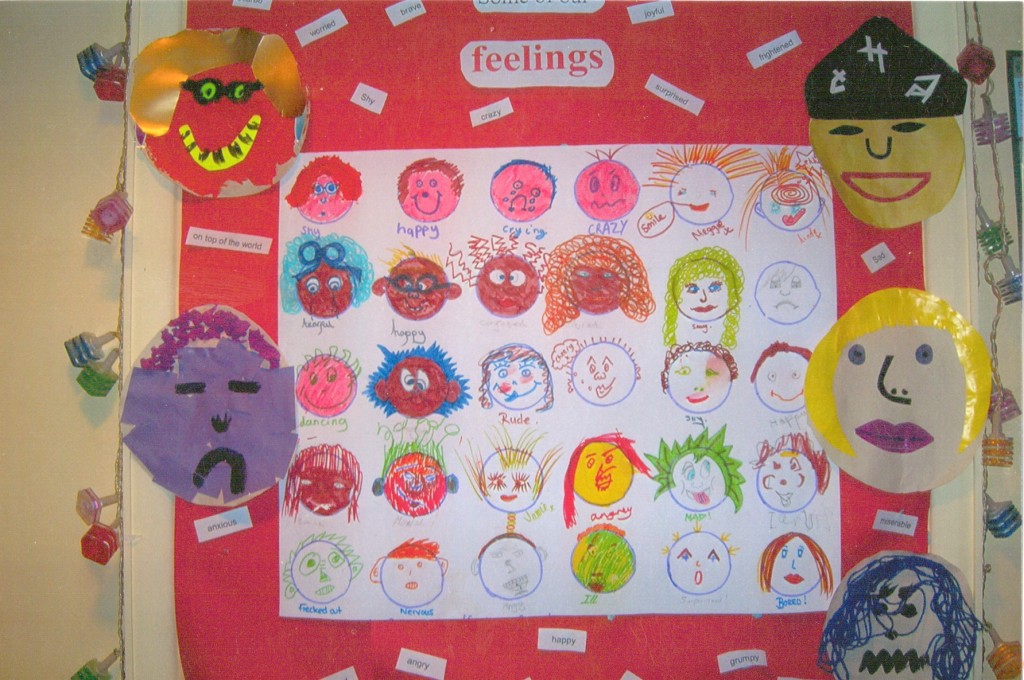
Showing how we feel today
Children from a children’s hospice use primate feelings communication boards (below)
The primates in the picture start off with blank faces. The children are given a selection of different primate faces with different visual feelings on such as happy, sad, crying, angry, worried, excited, confused and many more. Each of the faces have velcro on them which the children then stick onto the blank faces of the picture, making up stories and scenarios of the primates and their feelings. Examples of this may be that “one monkey is sad because his sister is ill, the other one is looking after him, his dad is feeling angry because his sister is ill.”
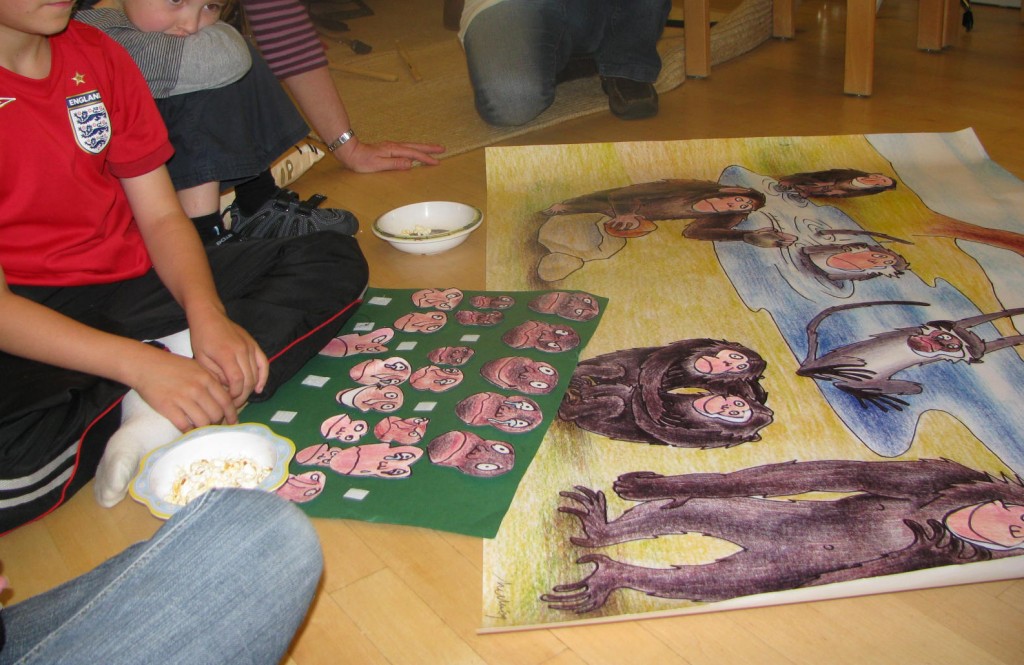
primate communication board
Art and creativity
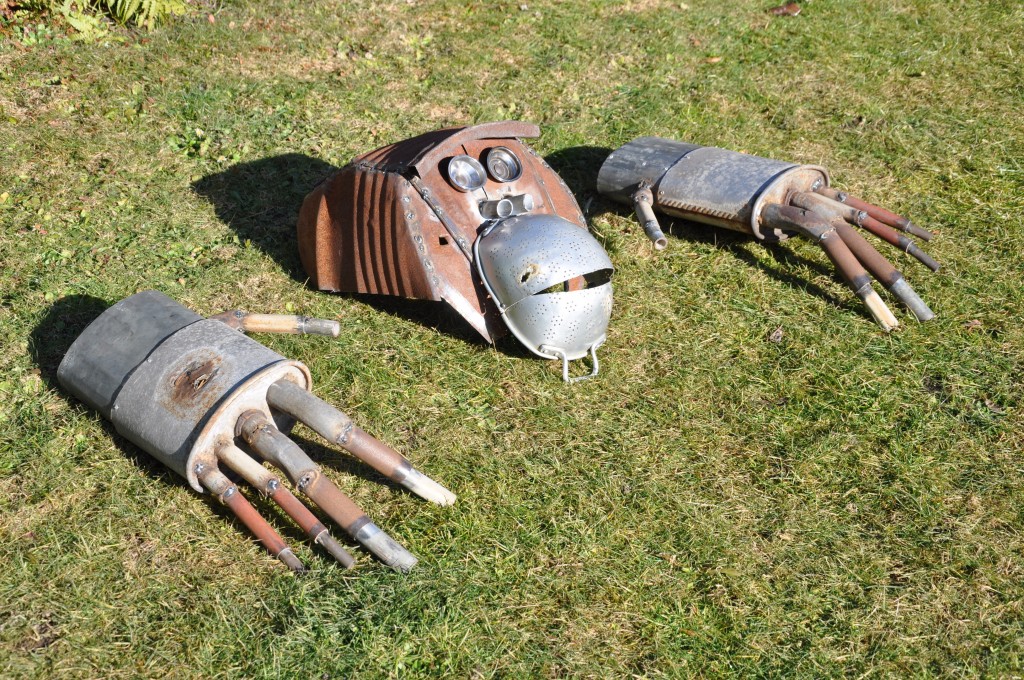
Made by Activities coordinator, Hellen Bersacola
Above: Using scrap materials, Hellen Bersacola (activities coordinator) welded together the materials to create a primate ape called a bonobo. Hellen has worked across the world with children in various settings using art to communicate feelings, and by using recycled materials to make various creative art. This again, allows us to encourage children to express their feelings and life experiences through creativity.
Below
Hellen works in East Timor with children from Arte Moris
Using art and creativity to express their feelings
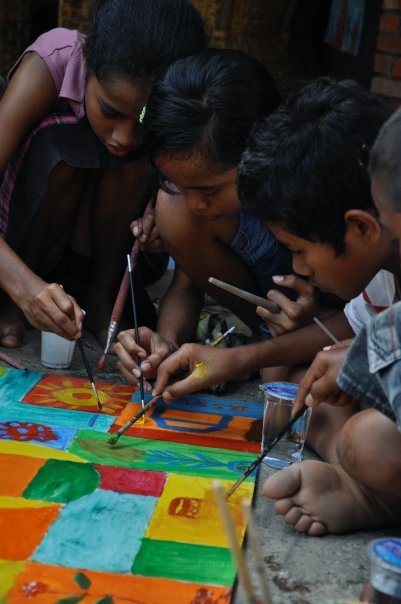
children painting in East Timor
Music and drama
Music is used to express feelings non verbally and is loved by many across the world. Bringing an emotion to every situation, can be stimulated by music in a powerful way.
There are lots of important benefits that can directly result from music and drama
• Aid communication especially about difficult to express emotions such as fear, anxiety and anger.
• Increase confidence and self esteem
• Increase motivation and ability to share experiences
• Provide an opportunity for fun, creativity and relaxation
• Increase self awareness, cognitive abilities and reduce stress
• Aid the expression of internal feelings, emotions and traumatic experiences that are too painful to be expressed verbally.
• Allow communication in a less threatening environment
• Greater self acceptance
• Increased sense of social connection
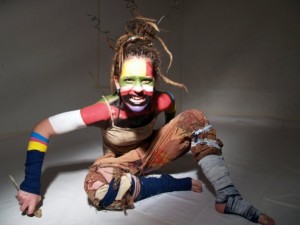
getting creative!
Dressing up and acting out stories, at any age and in any situation, can be a fun and creative way of using imagination and play, acting out stories , feelings and experiences, happy or sad. Whatever it is and whatever story is being told, then drama and dressing up provides children with a way of being able to discover their feelings and experiences, through fun and creativity.
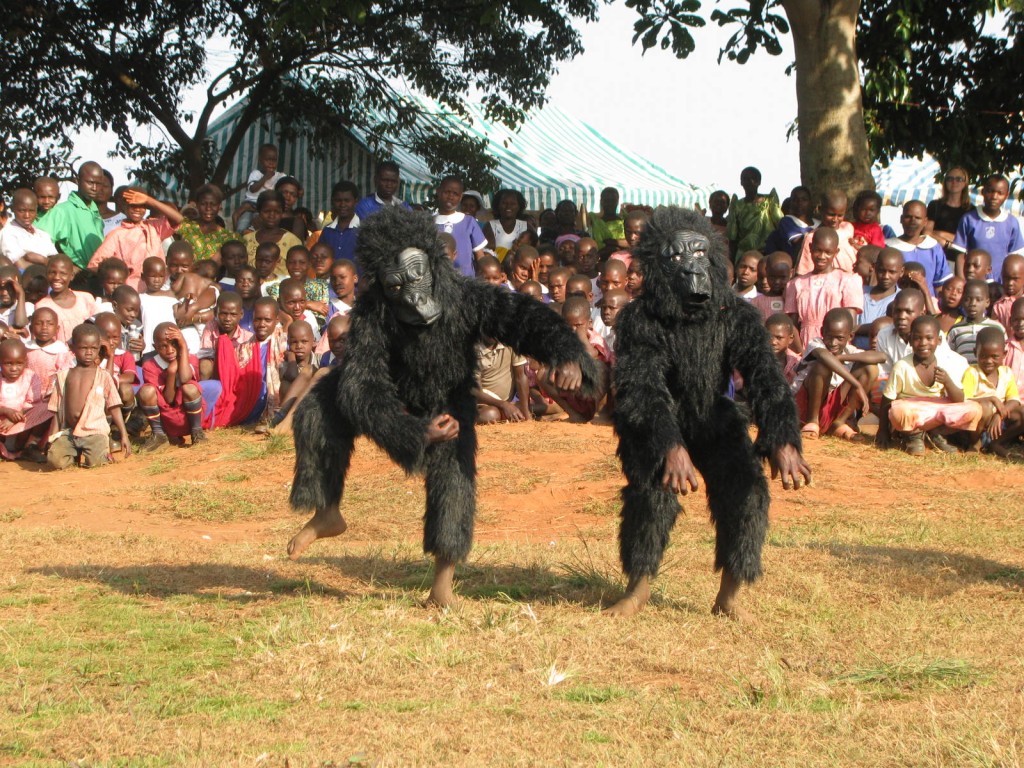
Children pretend to be gorillas in a school play in Uganda
Below, dressing up and having fun for all ages and in all situations
Visiting wildlife and animals as therapy
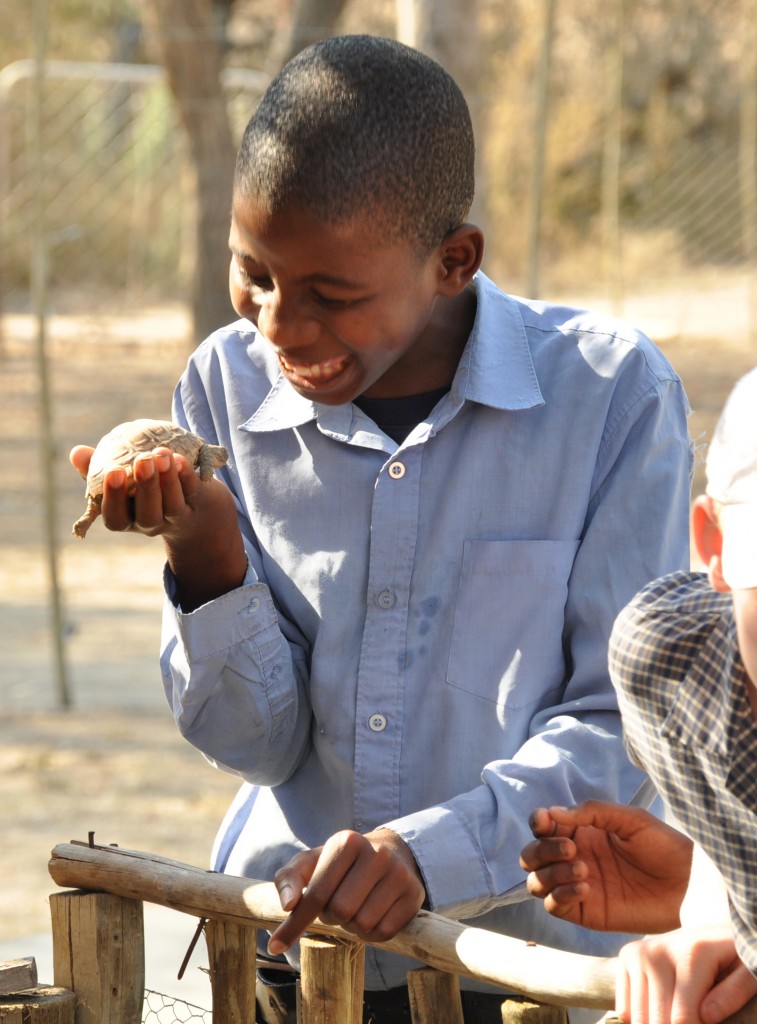
Taking children to a wildlife sanctuary in South Africa
Animal assisted therapy
Communication skills, body language and basic learning skills are often hard for many young people to achieve in today’s stressful and very pressurised modern society of the attitude of ‘you must stay in a classroom to learn’. Learning is achievable for everyone and that doesn’t necessarily have to take place on a computer or in a classroom.
Having an ability to learn about an animal hands on by taking care of it on a daily basis, communicating non verbally through body language, learning to ride and direct a horse can provide a young person with many skills and confidence.
The demands and actions of a horse or animal are clear, very straight forward and most importantly for some is that they ‘make sense’. The consequences of an action or behaviour are very honestly reflected by a horse. Animals do not respond well to mixed messages and the young person is able to learn quickly that patience and understanding of an animal lead to trust and an ability to communicate clearly with them, building on a strong friendship. All of this can then be used in a transferred skill in daily life with an added bonus of gaining an understanding for the animal they have been working so closely with.
To be successful with an animal takes commitment which also teaches a young person skills to complete a task. The horse has been described as the finest ‘mood altering drug’ . It is easier to see, understand, trust, hear and feel things from an animal than from other people.
Working along side an animal can be a relaxing and warm environment, being outside, using physical work and contact between a young person and animals can lead to a greater increase in positive moods, enthusiasm, self confidence and self gratification. Basic skills such as time keeping from caring for an animal and having to feed it, exersise it at certain times during the day are learnt through the animals, and transfered in a more indidvidual easy to understand way in life.
Allowing young people to have contact with animals may give them the opportunity to feel and recognise emotions such as anger, frustration and a lack of trust for other people and allow them to express their feelings with animals who respond in a very clear and negative way to mixed emotions. A young person can then gain an understanding of their own feelings, take responsibility for them and learn trust and respect with an animal. Learning that frustration can be overcome in a calm way is what an animal can teach a young person in its clear reaction to behaviour and actions.
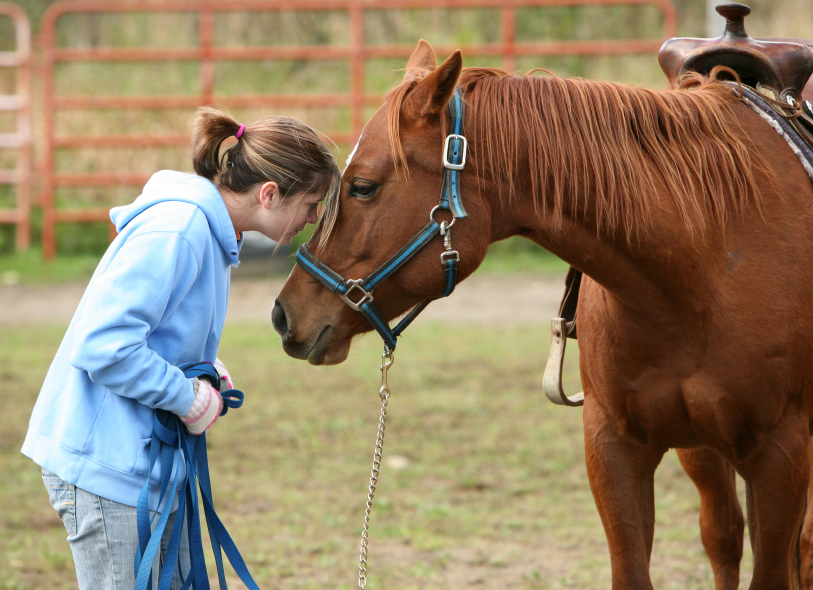
Sharing friendship with a horse