Equine Assisted Therapy
Yebo has taken its research to ‘Equine assisted therapy’ already existing in the UK with very unique one of its kind projects. Horses are said to be used to help in education, therapy and personal development. Routines in our daily life are often naturally occurring in that of the horse, which then allows an understanding of this to be reached through this.
Communication skills, body language and basic learning skills are often hard for many young people to achieve in today’s stressful and very pressurised modern society of the attitude of ‘you must stay in a classroom to learn’. Learning is achievable for everyone and that doesn’t necessarily have to take place on a computer or in a classroom.
Having an ability to learn about an animal hands on by taking care of it on a daily basis, communicating non verbally through body language, learning to ride and direct a horse can provide a young person with many skills and confidence.
The demands and actions of a horse or animal are clear, very straight forward and most importantly for some is that they ‘make sense’. The consequences of an action or behaviour are very honestly reflected by a horse. Animals do not respond well to mixed messages and the young person is able to learn quickly that patience and understanding of an animal lead to trust and an ability to communicate clearly with them, building on a strong friendship. All of this can then be used in a transferred skill in daily life with an added bonus of gaining an understanding for the animal they have been working so closely with.
To be successful with an animal takes commitment which also teaches a young person skills to complete a task. The horse has been described as the finest ‘mood altering drug’ . It is easier to see, understand, trust, hear and feel things from an animal than from other people.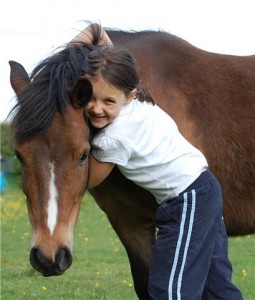
Working along side an animal can be a relaxing and warm environment, being outside, using physical work and contact between a young person and animals can lead to a greater increase in positive moods, enthusiasm, self confidence and self gratification. Basic skills such as time keeping from caring for an animal and having to feed it, exersise it at certain times during the day are learnt through the animals, and transfered in a more indidvidual easy to understand way in life.
Allowing young people to have contact with animals may give them the opportunity to feel and recognise emotions such as anger, frustration and a lack of trust for other people and allow them to express their feelings with animals who respond in a very clear and negative way to mixed emotions. A young person can then gain an understanding of their own feelings, take responsibility for them and learn trust and respect with an animal. Learning that frustration can be overcome in a calm way is what an animal can teach a young person in its clear reaction to behaviour and actions.
Yebo will continue with their research to run pilot Yebo Equine Assited Therapy projects with the belief that “Seeing leads to understanding”
get involved now and contact us at info@yeboyes.org