Category: Projects

Pony days April 2014

Want to be part of our pony days this year?

They are starting to run already. Here is how they work…

They are split into 2 different parts, an art session and then a  hands on animals session
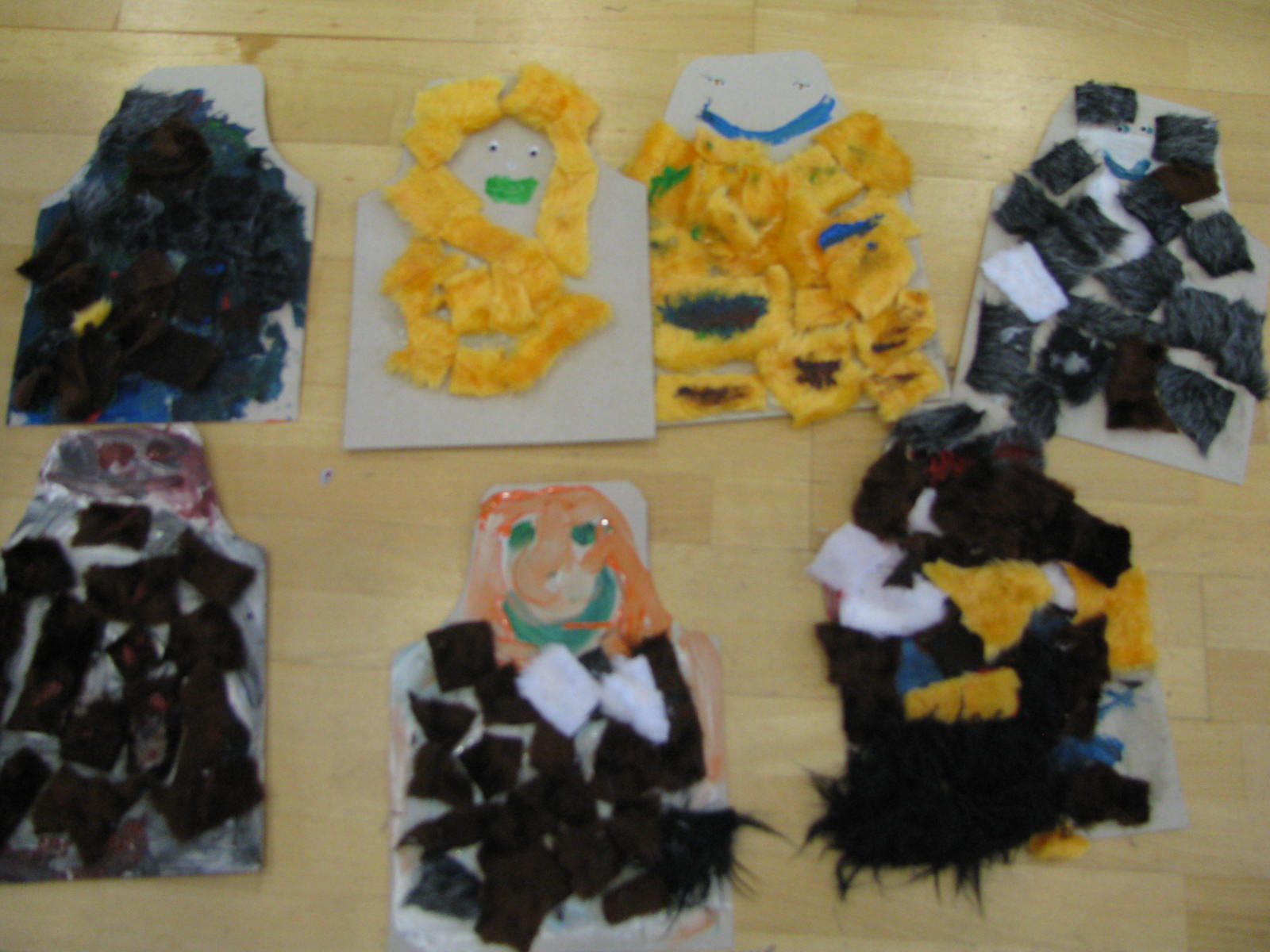
puppets

The art session

The art session is themed but is always open to a child’s individual ideas and needs. They are also aimed to discover and learn about different feelings and this can be done in many forms in a non-intrusive way.

Whilst the hands on animal half of the day is only with our ponies, the art session can be themed for different age groups, different interests that the children have or simply an idea that arises by members of the team that they think would work well with the children.

The children lead the sessions, but we give them our themes and ideas to support them with this.  For example, the theme of the session may be ‘ponies’ , ‘primates’ or ‘cars’. All of these can be put into a form of story telling,  by creating characters out of ponies, monkeys or cars.  Drawings, collages, paintings, musical instruments, can all be created through arts and crafts, and can all contain different feelings and emotions. Life is full of emotions that we can come across on a daily basis, and these can be brought into the characters and ideas that we are making.
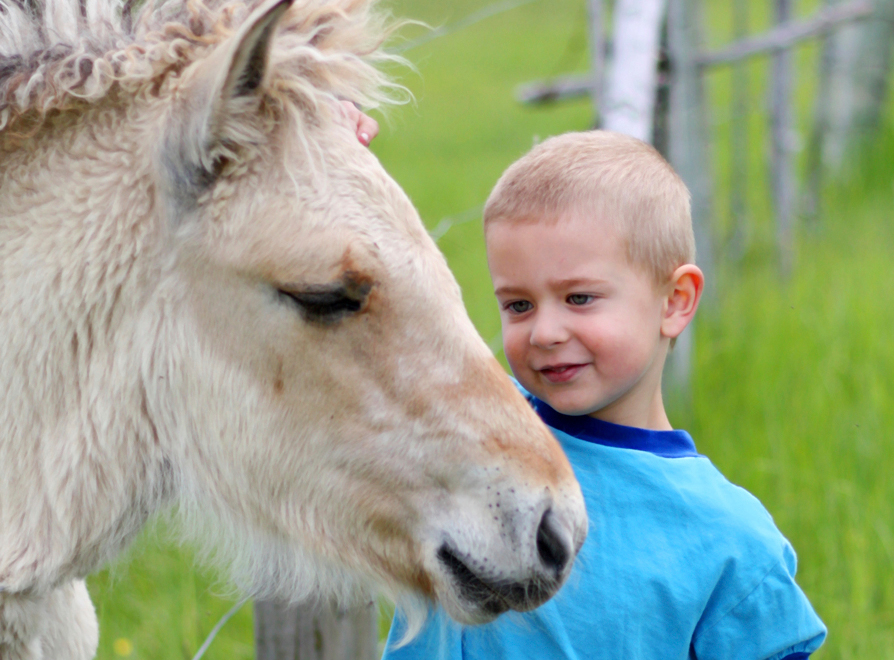
Pony and child

The hands on animal session

The second part of the day is the hands on animal session with our ponies at a farm within walking distance from our art venue.  The children will be able to take part in whatever way they choose to do. The activities available to them will include, stroking and patting the ponies, brushing the ponies, leading the ponies, sitting on the ponies and even riding them, all with experienced equine handlers and riders who know our ponies and their personalities very well. The children may even just wish to watch them if they don’t feel confident to do anything else.

Other information

  • We have between 1-4 children in one session
  • In each session, the children will be of similar ages
  • Parents/guardians must be present at each session.
  • This is ultimately a free service but donations are welcome on the day to help us fund the art materials we use, and the ponies dinner!
  • The sessions are run in the small village of Fernhurst which is near Haselmere, Surrey/Sussex

If you would like your child to participate in one of these sessions then please email us at lisa.davies@yeboyes.org

If you would like to volunteer your ideas then please email lisa.davies@yeboyes.org


Lets create a Flash mob!

Have you ever heard of a flash mob? Those great adverts that are on television where everyone starts dancing and singing in different places such as a train station, An airport , in shopping centres or places where  members of the public would be pleasantly surprised.

So  inpsired by many of them, Yebo want to create one to help bring awareness and fundraising to our organisation and what we are trying to acheive.

Many ideas have been put together but all of yours are also welcome. We would love you to comment below with your thoughts and ideas. We would like to know where you think this should take place, how this will be publicized and what sort of songs should be used in it. you can either leave a comment below or email us.

We are looking for beat-boxers,  actors, singers and musicians. Can you help?

Inspired by the following link which shows the advert from Terminal 5 at Heathrow airport, we would love you to take a look and be inspired too. Get in touch with us if you would like to help. We would love to hear from you.

info@yeboyes.org

watch?v=NB3NPNM4xgo

childrens-street-dance-

New projects in the making for 2013 and 2014

Yebo are currently in the process of supporting children and wildlife in Uganda in 2013 and 2014. After running our previous volunteer projects in 2010 and 2011,we are looking at the best way in which we can support children in the coming years by working closely with the organisations out in Uganda including UWEC, (The Ugandan Wildlife Education Centre) and those that are supporting street children.

We will be looking for volunteers to help out in Africa in the near future to work together with a local team of people out there at present.  We will keep you updated on this soon or you can contact us directly at info@yeboyes.org

meeting wildlife for the first time

Evaluating the Street children’s behaviour whilst learning about primates and their environment

Key Learning Drawn from the Street Kids VisitThe children at UWEC

The program had a pre and post visit evaluation. Pre included observations made in their first trip and post was at the return trip at the facility.

Beneficiaries

The first trip comprised of 35 children and the second had 42 children including two facilitators that escorted the group.

Activities

The children engaged in different activities which included; community work, a guided tour around the zoo (UWEC), life skills seeing the animalsexposure, music dance and drama, lunch and refreshments. In undertaking these activities, chimpanzees were used as ambassadors to speak for other animals that have had similar circumstances in their lives.

Key Learning

From the observation and interactions with the street children, the following key learning’s were drawn;

  • The children willingly undertook community work and through this they learnt how to be responsible and live in a clean environment. They were asked if they had any problem with tiding up where they live or it’s something that they did not like to do in their everyday life.Learning

Their responses indicated that it was very important in avoiding disease spread that would affect them since they have no money and have to be healthy so as to get energy for every day.

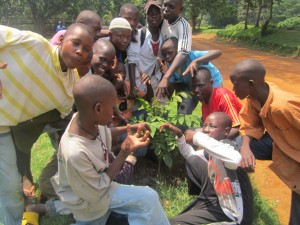
It’s therefore important to note that street children can play a role in cleaning up the towns or areas they live if mobilized.Looking after their environment

  • They also learnt how be co-operative and work together as a group and with different people in the communities they live in, unlike their first visit in which they did not do any community work. It was observed that the children were much relaxed on the second visit and paid more attention to the facilitators.

This led us to the conclusion that a one off visit may not easily influence behavior and action among the street children. This is on ground that the children were very skeptical on the first visit, but slowly learnt to trust their facilitators.

  • Through another guided tour the children learnt more about animals and this time they were more inquisitive in learning about anything that they were being taught which was not in the same case during their first visit, where they did not feel confident  to ask questions or want to know more about the animals that they saw and liked. They expressed their key learning on animals through pictures, stories, and questions

During the second visit, the children asked more questions like,

  1. What is the relation ship between chimpanzees and humans?

  2. At what age do snakes give birth?

  3. Why do tortoises survive for a long time?

  4. Do you always take back these animals to the wild?Enjoying their time away from the streets

This is evident that they had developed a passion for animals and they no longer just have a concern about their own plight, but the environment that surrounds them, unlike in the first visit.

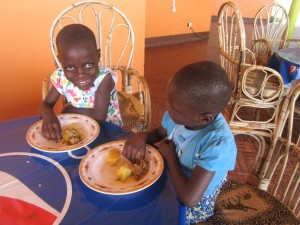
When asked to tell tales about animals, this time they had more stories to tell with out any hesitation for example how people came from chimpanzees, why the eagle eats the hens’ chicks, how the hare tricked the leopard, why the giraffe developed a long neck among others, and also were able to derive meanings and lessons from these stories of which they later related to their daily lives and learnt from them, unlike in their first visit where they told stories but could not derive any meaning out of them.enjoying good food, away from the streets

  • The children mentioned some actions they would undertake to protect animals and their habitat. They mentioned; feeding, not killing, taking time to learn about animals and planting trees.

They were also concerned about the wild animals that are eaten by the carnivorous animals and humans as well and asked Uganda wildlife education Center to encourage people become vegetarians.

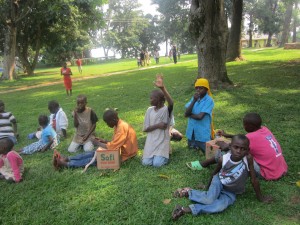
  • relaxing in good healthy surroundingsThey also named polythene and plastic as an environmental problem and advocated for picking all polythene bags and plastics that are littered. They demonstrated this through a community service activity at UWEC where they collected all polythene. They suggested reusing the polythene to; light their stoves back at home, unlike in the first visit where they discarded the sweets and biscuit wrappers after eating.

  • Keeping food, constructing huts. This was contrary to the first visit where poor waste disposal was evident.

  • When asked to draw animals they liked and why they liked them this was done on this particular visit where they used their skills and creativity more, unlike in the first visit most of them did not want to draw and others did not know how to draw the animals they liked and tell why they liked them, they simply drew images which did not portray the real animals they had seen.

Conclusion

Sustained programs with street kids can lead to behavior change and action among street kids if properly managed.

You can help support these programs which we aim to run each month. 2 days a month costs Yebo £400. If you would like to donate even 50p we would be so so grateful for your kind support.

Our account details are below

LLoyds Tsb

Account name: Yebo

Account number: 00802607

Sort code: 30-93-74

Overseas payments

BIC: LOYDGB21022

IBAN: GB87 LOYD 3093 7400 8026 07

The Street children – Side by side with wildlife. Outreach 2011

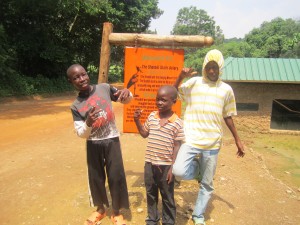
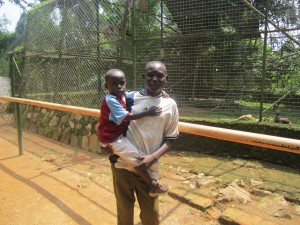
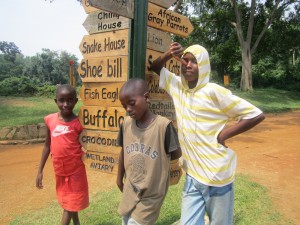
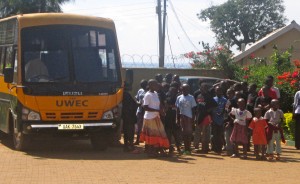
The bus arrives to pick the children upOn the 18th November 2011, Yebo supported Children living on the street and at the safe house of Raising up Hope orphanage in Uganda.
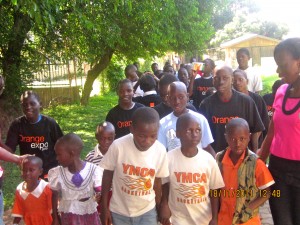
31 children aged between 4-16 years of age,  attended the day, to learn, be creative and to meet wildlife. The group are led in Uganda at the Ugandan wildlife education centre by members of staff from the centre who work tirelessly and passionately to support the projects and the children through their experiences.

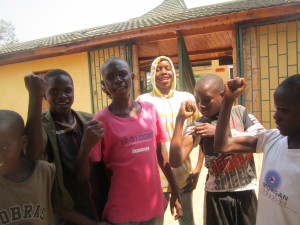
Walking around the centre with the staff and their friendsThe group was up by 5AM and started preparing for the day in Looking at the animalsanticipation of excitement at seeing animals, eating good food, play and creativity, and the fun of traveling away from the safe house and streets where they are living. As they made a brief clean up of the safe house, their joy increased on seeing the Ugandan Wildlife Education Centre bus and started their journey at 8AM
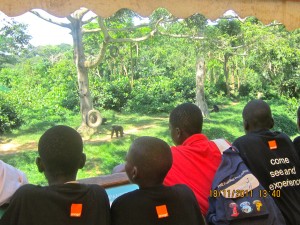
At exactly 10AM the group  arrived at UWEC and were welcomed by the program coordinator, Isaac, who led them to the conference room, where 8 UWEC staff greeted them, and were equally excited to share the experience with them

The children were all asked to meet their expectations of the day Watching the chimpanzeeswhich were:

– To see the animals

– To feed the Being creative with drama and singingchimpanzees

– To sing and dance

– To swim

– To eat good food

– To sleep in the dormitory

The children had a wonderful day and explored many ways to learn and to grow as people in a positive way.

Using drawings and art to reflect and learnDuring the day the children went around all of the animal exhibits at the centre, led by the UWEC Reflectingstaff that have been assigned to the project. The children were able to have a question and answer session on all of the animals as they went around to see them all and always focus on the chimpanzees as a point of reflection.
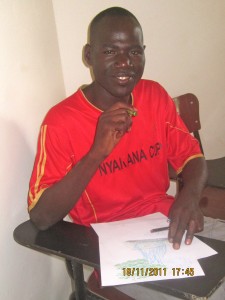
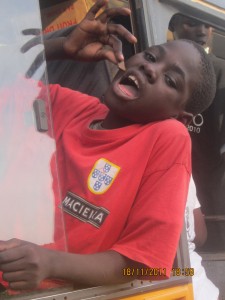
They were also given a lot of reflection time that was focused on having fun and experimental learning at UWEC. This is something that Yebo is aiming to achieve, allowing the children to learn in a creative and reflective way, looking at all wildlife and primates, seeing the knowledge and similarities there are between humans and the animals, and how we can protect them.

It is also an aim to allow the children to understand that they have worth in their life and that they can feel a sense of belonging, share a ray of light and be able to realise that they are able to have the same worth as any other child in the world. This is linked with the wildlife and the mistreatment that happens to animals in the wild, and the things that humans can do to protect and conserve them.

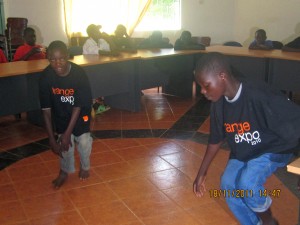
The end of the day, food to take home!The children used their creativity and mimed, sung and danced to different local music, putting their skills and imagination into all of their achievements, and allowing their talent to show through.
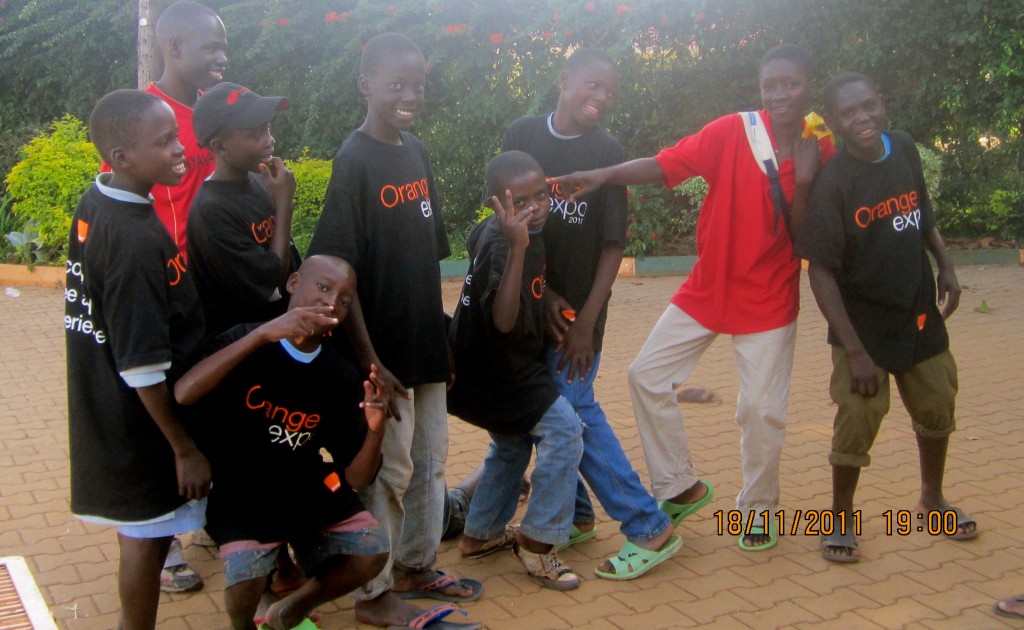
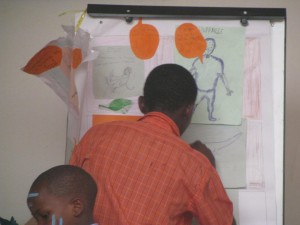
Many of the children that Yebo volunteers have met in the past when out in Uganda, volunteering with the children are the talents of each individual child in so many different things. These children are incredibly intelligent and VERY talented in ways such as art, creating pieces of work such as necklaces, learning other languages from their own, designing stories and projects of their own and many more. We would love for this to be shown in the work and learning that they are doing with such wonderful local staff members at UWEC.

Breaks and lunch was provided with numerous refreshments which we fund for the children to eat well in their day. We are aware that the children do sometimes go without food where they live and we know that when they are at the centre, the food that they are given is good and nutritious for them.

An evaluation was conducted at the end of their day in pictures where they could show what they had learnt on the day, which will help at the next day the children have at the centre.

The next visit will be a Christmas party at the centre, using the same concept and giving the children a chance to celebrate Christmas in a good and positive way, aswell as achieving their aims and objectives.

We are proud to support such wonderful children, a wonderful Wildlife Education Centre and would like to pay thanks to the staff that helped the children on the day including Isaac Mujassi,Helen Atim, Meble Nabitosi, Charles Isiko, and the staff at Raising up Hope, Patrick and William.

Thank you to Yebo’s fundraising team who volunteer their time and efforts in making these days happen. We are looking forward to the Christmas party which will take place on 30th November.

With friends and having fun

Outreach projects begin this year

Drawing a story in cartoonsFor those who have been keeping up to date on our projects we have now raised enough money to begin more of our outreach projects in Uganda.
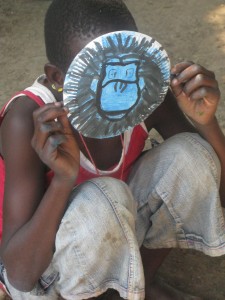
This money will allow the children from the orphanage, street and safe house in Uganda to have the opportunity to have education and creative therapeutic activities around primates and other wildlife at the Ugandan Wildlife Education centre in Entebbe.

The trips over the next 6 months will consist of days at the sanctuaries and overnight camps at the centre.

Along with learning and joining in with creative activities the children are provided with good food and drinks throughout their Making maskstime at the centre. This can be an important part of their trip aswell, due to the lack of food that all the children experience.

The activities out in Uganda are being run by a team of local staff from the centre. These trips and ideas were supported in the past few volunteer trips that have occurred in 2009, 2010 and 2011. Our 2011 volunteers who were out in Uganda in July, helped to initiate some of these projects and used their skills and ideas to make them work.

Please keep updated for blogs that will be posted in the next week after the children have had their first visits.

With thanks to the local bars and pubs in the local area of Guildford, Surrey, England, that have contributed to some of the fundraising that we have been doing.